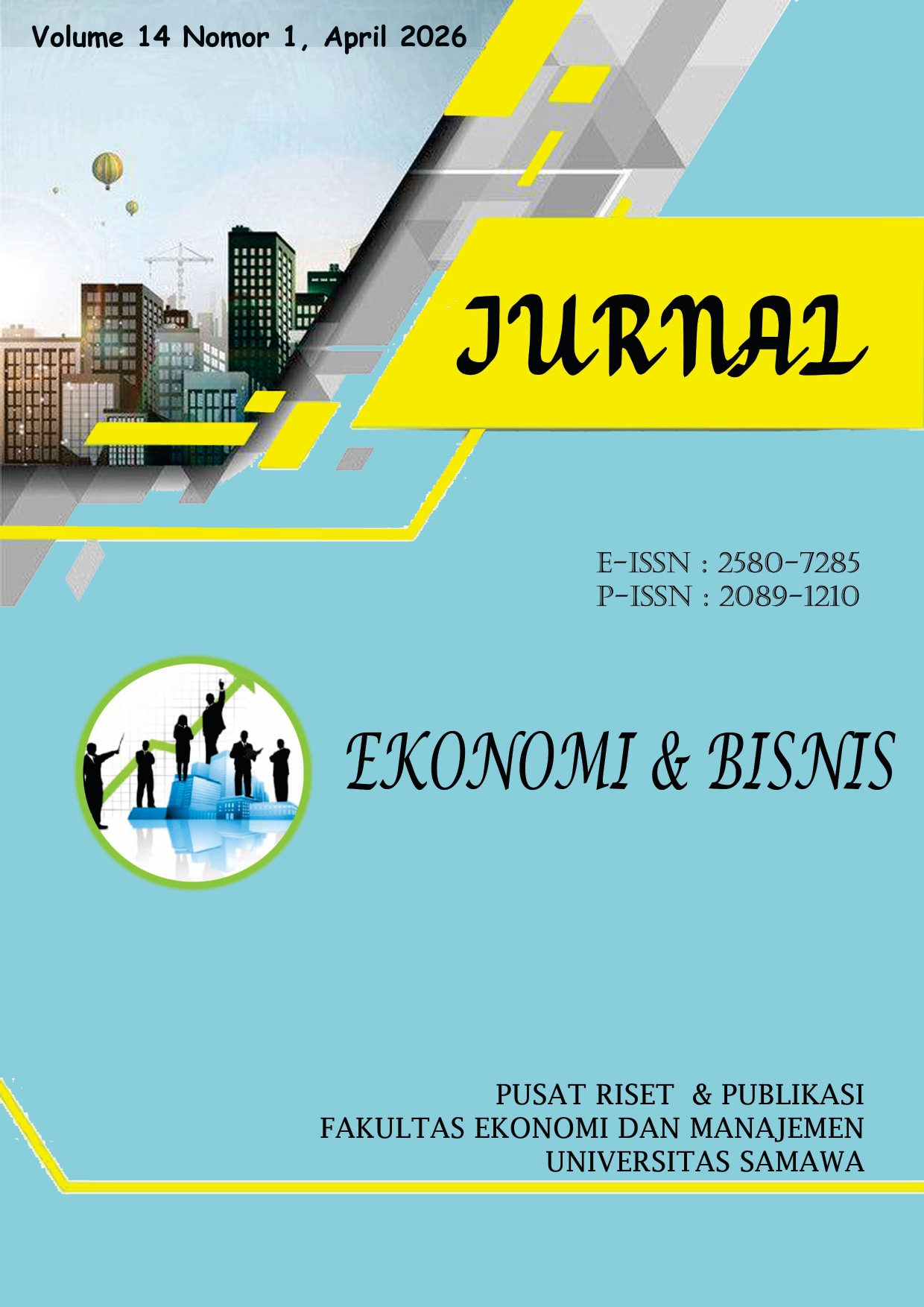
PERLINDUNGAN KONSUMEN DALAM ERA DIGITAL: KAJIAN TERHADAP KEBIJAKAN HUKUM DI INDONESIA
DOI:
https://doi.org/10.58406/jeb.v14i1.2566Keywords:
Consumer Protection, Digital Era, Legal Policy, Electronic TransactionsAbstract
Digital transformation has changed transaction patterns between consumers and businesses while creating various new risks related to transaction security, misuse of personal data, information asymmetry, digital platform accountability, and the use of algorithm-based technologies. This study aims to analyze consumer protection in the digital era and examine the legal policies implemented in Indonesia to ensure legal certainty and safeguard consumer rights. The study employs a qualitative approach using a literature review method by examining laws and regulations, scientific literature, journal articles, books, and other legal sources relevant to digital consumer protection. The findings indicate that Indonesia’s consumer protection framework has developed through various regulations, including the Consumer Protection Law, the Electronic Information and Transactions Law, the Personal Data Protection Law, and regulations governing electronic commerce. However, the effectiveness of consumer protection still faces several challenges, including regulatory fragmentation, weak coordination of supervision, misuse of personal data, digital fraud, cross-border transactions, dark patterns, and the use of algorithms and artificial intelligence that may influence consumer decision-making. Therefore, regulatory harmonization, stronger accountability of businesses and digital platforms, improved supervision and dispute resolution mechanisms, as well as enhanced legal and digital literacy among the public are required. Thus, consumer protection in the digital era should be developed through an adaptive, integrated, preventive, and repressive approach to keep pace with technological developments while ensuring security, fairness, and legal certainty for consumers.
Downloads
Published
Issue
Section
License
Copyright (c) 2026 Daswa Ramadhan, Dhafa Ashari Feratama

This work is licensed under a Creative Commons Attribution-ShareAlike 4.0 International License.